

Beard Length Guide: A Comprehensive Overview (Updated 01/24/2026)
Navigating beard lengths is key; a well-maintained beard complements your face, enhancing features and boosting confidence. Experimentation is vital, considering weight changes and desired styles.
Embarking on a beard journey requires understanding that facial hair isn’t merely about length; it’s a powerful tool for self-expression and facial harmony. The right beard length can dramatically alter your perceived face shape, enhancing your best features and minimizing those you prefer to downplay. Today, January 24th, 2026, marks a renewed focus on personalized grooming, and beard length is central to this.
Historically, beards have signified status, wisdom, and masculinity, evolving through various cultural trends. Now, the modern man utilizes beard length strategically. A shorter stubble conveys a rugged, approachable vibe, while a longer, fuller beard projects maturity and gravitas. The key is finding the length that aligns with your individual style and face shape.
Consider the impact of weight fluctuations; as highlighted, a weight loss transformation might necessitate adjusting your beard style to maintain balance. A beard should complement, not accentuate, your face. This guide will explore the nuances of beard lengths, from the barely-there stubble to the majestic full beard, providing insights to help you achieve your desired look. We’ll delve into how different lengths interact with various face shapes, ensuring you present the most flattering version of yourself.
Understanding Face Shapes & Beard Styles
Identifying your face shape is paramount when selecting a beard style and length. The seven basic face shapes – Oval, Oblong/Rectangle, Round, Square, Diamond, Triangle, and Heart – each benefit from specific beard approaches. It’s not a rigid rulebook, but a guiding principle for achieving facial balance.

A beard’s primary function is to create the illusion of symmetry and proportion. For instance, a round face benefits from styles that add length and definition, avoiding fullness at the cheeks. Conversely, a longer face can utilize fuller beards to add width. Understanding these dynamics is crucial.
The goal isn’t to drastically alter your face, but to enhance its natural features. As the provided information suggests, a square jawline shines with styles that showcase its strength, while a wider angle point at the chin can soften a square-ish jaw. Experimentation, aided by photos, is key to discovering what truly works for you. Remember the anecdotal evidence – even mustache styles can significantly impact attraction! This guide will break down optimal beard lengths for each face shape, empowering you to make informed decisions.
The Oval Face Shape & Beard Length
The oval face is considered the most versatile, lending itself to a wide array of beard lengths and styles. This is because the oval shape is naturally balanced, with a forehead and jawline that are roughly the same width. Consequently, you have significant freedom in experimentation.

Shorter stubble (1/8″ ─ 1/4″) can accentuate the jawline, providing a defined and masculine look. Medium lengths (1/2″ ⎼ 1″) offer versatility, allowing for shaping and styling to complement your personal preference. A classic, well-groomed medium beard is almost universally flattering on an oval face.
Longer beards (1″ ─ 2″+) also work exceptionally well, adding fullness and gravitas without overwhelming the face’s natural proportions. However, maintaining a longer beard requires commitment to grooming and styling. Don’t be afraid to explore different shapes – a rounded beard, a pointed beard, or even a Van Dyke can all look fantastic. The key is to ensure the beard remains proportionate to your overall features and doesn’t appear too heavy or unbalanced.
The Round Face Shape & Beard Length
For round faces, the goal is to create the illusion of length and definition, counteracting the face’s natural fullness. Avoiding overly full or circular beard styles is crucial, as these can exacerbate the roundness. Strategic beard length and shaping are key to achieving a more sculpted appearance.
Shorter beard lengths (1/8″ ─ 1/4″) can work, but require careful attention to shaping. A defined jawline is essential; avoid letting the beard blend into the cheeks. Medium lengths (1/2″ ─ 1″) are often ideal, allowing for a beard that’s longer on the chin and shorter on the sides. This elongates the face.

Longer beards (1″ ⎼ 2″) can be successful if properly maintained. Fading the sides and keeping the chin area more substantial creates vertical lines, slimming the face. Generally, you’ll want to fade the back of the beard and leave it longer in front to elongate the face. Avoid a full, bushy beard that adds width. A well-groomed, angular beard is your best bet.
The Square Face Shape & Beard Length
Men with square face shapes possess strong jawlines, a defining characteristic that a beard should complement, not compete with. The aim isn’t to soften the angles, but to balance them, creating a harmonious look. A beard should accentuate, not hide, that killer square jawline.

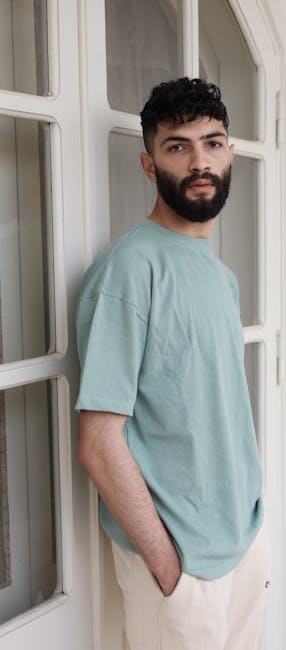
Shorter beard lengths (1/8″ ─ 1/4″) can work well, particularly a neatly trimmed stubble that highlights the jawline. Medium lengths (1/2″ ⎼ 1″) offer versatility, allowing for a slightly fuller beard that still maintains a defined shape. Avoid overly harsh lines or sharp angles in the beard’s design.
Longer beards (1″ ─ 2″) can be incredibly stylish, but require careful shaping. A rounded beard, or a circle beard, can soften the squareness, creating a more balanced profile. Maintaining some bulk on the chin and keeping the sides relatively shorter is beneficial. Remember, it’s the circle of life, and a circle beard can truly enhance your features!
The Rectangular/Oblong Face Shape & Beard Length
For those with rectangular or oblong face shapes, the goal is to create the illusion of width and minimize the length of the face. A beard can be a powerful tool in achieving this balance, adding fullness to the sides and softening the overall appearance. Avoid styles that elongate the face further.
Shorter beard lengths can work, but require careful attention to shaping. A well-maintained stubble can add some width, but avoid keeping it too short on the sides. Medium lengths (1/2″ ─ 1″) are often ideal, allowing for fullness on the cheeks and jawline.
Longer beards (1″ ⎼ 2″+) can be effective, but should be styled to add width. A fuller beard, particularly one that’s slightly wider at the bottom, can balance the length of the face. Fading the back of the beard and leaving it longer in front can also help elongate a rounder face, creating a more proportional look. Experimentation is key!
The Diamond Face Shape & Beard Length
Individuals with diamond-shaped faces – characterized by wide cheekbones and a narrower forehead and chin – benefit from beards that soften the angles and add width to the lower portion of the face. The aim is to create a more balanced and harmonious appearance, avoiding styles that accentuate the cheekbones too much.
Medium beard lengths (1/2″ ─ 1″) are generally the most flattering. A full beard that connects to the sideburns can add width to the forehead, balancing the narrowness. Maintaining some fullness on the chin is also crucial to avoid making the face appear overly pointed;
Shorter stubble can work, but it may not provide enough width. Longer beards (1″ ─ 2″+) can be effective if styled correctly, ensuring they don’t add excessive volume to the cheekbones. A carefully trimmed mustache can also draw attention away from the cheekbones and towards the mouth. Remember, balance is key!
The Triangle Face Shape & Beard Length
Those with triangle-shaped faces – wider jawlines and narrower foreheads – should focus on beards that add volume to the upper face, creating a more proportional look. The goal is to visually broaden the forehead and soften the strong jawline, achieving a balanced aesthetic; Avoiding styles that emphasize the jaw is paramount.

Medium to long beard lengths (1/2″ ⎼ 2″+) are typically most effective. A fuller beard on the cheeks and chin adds necessary width to the upper portion of the face. A well-maintained mustache is also incredibly important, drawing attention upwards and balancing the wider jaw. Consider styles that are fuller on the sides.
Shorter stubble might accentuate the jawline, which is generally undesirable. Longer beards offer more styling options to create the desired volume. Experiment with shaping to ensure the beard doesn’t appear too bulky or overwhelming. Remember, the aim is balance and proportion!
The Heart-Shaped Face & Beard Length
Individuals with heart-shaped faces – characterized by wider foreheads and narrower chins – benefit from beards that add fullness to the lower portion of the face. The objective is to balance the wider upper face and create a more proportionate silhouette. Styles that add width to the jawline are highly recommended, softening the pointed chin.
Medium to long beard lengths (1/2″ ─ 2″+) generally work best. A fuller beard, particularly on the chin and jawline, adds the necessary width. A closely cropped beard on the sides can prevent excessive fullness around the cheeks, maintaining a balanced appearance. A well-groomed mustache can also contribute to overall balance.
Avoid styles that are too full on the cheeks, as this can further emphasize the forehead’s width. Experiment with shaping to ensure the beard doesn’t appear overly bulky. The key is to create a visual balance between the upper and lower portions of the face, achieving a harmonious look.
Short Beard Lengths (1/8″ ⎼ 1/4″): The Stubble Look
The stubble look, ranging from 1/8″ to 1/4″ in length, represents a minimal commitment to facial hair, offering a rugged yet refined aesthetic. It’s an excellent entry point for those hesitant about growing a longer beard or seeking a low-maintenance style. This length subtly defines the jawline without the demands of extensive grooming.
Stubble suits most face shapes, but requires consistent trimming to maintain its desired length and prevent it from becoming unkempt. Regular shaping around the neckline and cheek lines is crucial for a polished appearance. It can visually add definition to a softer jawline, or complement a stronger one.
Maintenance involves trimming every few days, depending on hair growth rate. Utilizing a beard trimmer with adjustable guards allows for precise length control. While minimal styling is needed, beard oil can hydrate the skin and soften the emerging hairs, reducing itchiness and promoting a healthier look. It’s a versatile style, easily transitioning from casual to slightly more formal settings.
Medium Beard Lengths (1/2″ ⎼ 1″): Versatility & Maintenance

Medium beard lengths, spanning from 1/2″ to 1″, unlock a realm of versatility, offering a balance between manageability and stylistic expression. This range allows for more defined shaping and experimentation with different beard styles, catering to various face shapes and personal preferences. It’s a commitment beyond stubble, requiring a more dedicated grooming routine.
At this length, regular trimming – typically every week or two – is essential to maintain shape and prevent split ends. Utilizing beard scissors for detail work and a trimmer for overall length control is recommended. Beard oil and balm become increasingly important to hydrate both the beard hair and the underlying skin, preventing dryness and itchiness.
Styling options expand significantly; you can experiment with tapered sides, defined cheek lines, and subtle shaping of the mustache. This length can visually balance a rounder face by adding length, or soften a square jawline. Consistent brushing helps distribute oils and maintain a neat, groomed appearance. It’s a length that projects confidence and sophistication.
Long Beard Lengths (1″ ⎼ 2″): Commitment & Styling
Entering the realm of long beards – between 1″ and 2″ – signifies a substantial commitment to grooming and patience. This length demands consistent care to maintain health, shape, and prevent a wild, unkempt appearance. It’s a statement, projecting a sense of ruggedness and individuality, but requires dedication.
Maintenance intensifies. Daily brushing with a quality beard brush is crucial to distribute natural oils and detangle. Weekly conditioning treatments with beard oil and balm are no longer optional, but essential for hydration and preventing breakage. Trimming becomes more focused on shaping and removing split ends, rather than overall length reduction.
Styling options become more elaborate. You can sculpt a defined shape, create layers, and experiment with different mustache styles. This length can effectively elongate a round face or balance a strong jawline. Consider using beard wax for added hold and control, especially for intricate styles. A well-maintained long beard is a testament to dedication and personal style, showcasing a confident and mature aesthetic.
Very Long Beard Lengths (2″+): The Full Beard Experience
Beyond the 2-inch mark lies the full beard experience – a realm of significant commitment, patience, and a bold statement of individuality. This length isn’t merely about growing facial hair; it’s about cultivating a lifestyle and embracing a unique aesthetic. It demands unwavering dedication to grooming and a willingness to stand out.
Maintenance is paramount. Daily brushing with a boar bristle brush is non-negotiable, ensuring even oil distribution and preventing tangles. Regular conditioning with beard oil and balm is essential, alongside deep conditioning treatments. Trimming focuses on maintaining shape, removing split ends, and preventing a chaotic appearance. Expect to dedicate substantial time to beard care.
Styling options are expansive, allowing for intricate braids, twists, and sculpted shapes. A very long beard can dramatically alter perceived face shape, potentially softening strong features or adding definition. It’s a powerful expression of personality, requiring confidence and a commitment to showcasing a truly remarkable facial feature. This length is not for the faint of heart, but for those who embrace the art of beard cultivation.
Beard Length & Weight Loss Considerations
Significant weight loss can dramatically alter facial structure, impacting how your beard appears and complements your features. As facial fat diminishes, underlying bone structure becomes more prominent, potentially making your face appear longer or more angular. This shift necessitates a re-evaluation of your beard length and style.
A beard that once suited a fuller face might now accentuate a newly defined jawline or highlight a more prominent chin. Consider shortening the beard, particularly at the bottom, to elongate a rounder face. Fading the sides and leaving more length in the front can also create a slimming effect. Experimentation is crucial.

Buzzing down and reshaping, as suggested during weight transitions, allows for a fresh start. It provides an opportunity to tailor the beard to your evolving facial contours. Don’t hesitate to consult a barber for professional guidance. Remember, the goal is to harmonize your beard with your current face shape, enhancing your overall appearance and confidence throughout your weight loss journey.
The Impact of Beard Style on Perceived Face Shape
A beard isn’t merely facial hair; it’s a powerful sculpting tool. Strategic styling can visually alter your face’s perceived shape, balancing proportions and highlighting desired features. Understanding this impact is crucial for selecting a beard that truly complements your bone structure.

For instance, a wider beard at the chin can add fullness to a narrow face, creating a more balanced appearance. Conversely, a tapered beard can slim a round face, emphasizing the jawline. The angle of the beard – pointed versus rounded – also plays a significant role. A pointed beard can elongate a shorter face, while a rounded beard softens a strong jawline.
Consider the “circle of life” principle – a well-defined beard can showcase a strong jawline, like a lion’s mane. The key is to avoid accentuating features you wish to minimize. A beard should complement, not exaggerate, your natural face shape. Careful trimming and shaping are essential to achieve the desired visual effect, transforming your overall look.
Circle Beard Styles & Square Jawlines
The circle beard, a classic style, presents a unique opportunity for those with square jawlines. While seemingly counterintuitive, a well-executed circle beard can soften the angularity of a square face, creating a more balanced and approachable aesthetic. The key lies in strategic shaping and length.
Instead of attempting to hide a strong jaw, embrace it! A circle beard, particularly one with a slightly rounded bottom, draws attention to the jawline while simultaneously mitigating its harshness. Maintaining a moderate length – not too short, not overly long – is crucial. Too short, and the effect is lost; too long, and it can appear unkempt.
Consider a subtle fade along the sides, blending the beard seamlessly into the cheeks. This prevents the beard from adding unnecessary width. Remember, the goal isn’t to disguise the square shape, but to harmonize it. A circle beard, when paired with a square jawline, can project confidence and a touch of rugged sophistication, embodying a timeless appeal.
Mustache Styles & Attractiveness
The mustache, a powerful facial feature, holds a surprisingly significant sway over perceived attractiveness. Throughout history, mustache styles have waxed and waned in popularity, often reflecting broader cultural trends and ideals of masculinity. The “right” mustache can dramatically enhance one’s appearance, while a poorly chosen style can detract from it.
Observations suggest a correlation between mustache styles and social interaction. Anecdotal evidence points to increased attention from others when sporting a well-groomed mustache, compared to being clean-shaven or sporting a full, unkempt beard. The key lies in finding a style that complements facial features and personal style.
From the classic handlebar to the subtle chevron, the options are vast. A neatly trimmed mustache conveys attention to detail and self-care, qualities often associated with attractiveness. Experimentation is encouraged; what works for one individual may not suit another. Ultimately, confidence is the most attractive accessory, and a mustache worn with assurance will always make a statement;
Tools for Maintaining Beard Length & Shape
Achieving and maintaining a desired beard length and shape requires a dedicated toolkit. Beyond simply letting it grow, regular grooming is essential for a polished and healthy appearance. A quality beard trimmer with adjustable guards is paramount, allowing for precise length control and even trimming across the beard.
Sharp beard scissors are crucial for detailing and shaping, particularly around the mustache and neckline. A beard comb, preferably made of wood or horn, helps distribute beard oil and balm evenly, detangling and smoothing the hair. Beard brushes, with either boar or synthetic bristles, exfoliate the skin underneath, promoting healthy growth and preventing ingrown hairs.
Don’t underestimate the importance of beard oil and balm; these products hydrate the beard and skin, reducing itchiness and dryness. A dedicated beard wash and conditioner, formulated without harsh sulfates, will cleanse without stripping natural oils. Finally, a good quality shaving brush and pre-shave oil are vital for maintaining clean lines around the beard’s edges.